The Data You Already Have Can Make Your Business Less Chaotic
Learn how small business analytics turns existing data into clearer decisions and less chaos. See what your business data can reveal with RFIP Analytics.
July 23, 2026
Your Business Probably Doesn't Have a Data Problem. It Has a Visibility Problem.
Running a small business means making decisions every day.
Some are straightforward. Others feel like educated guesses.
Should you spend more on marketing? Is it time to hire? Which services are actually making money? Why did last month feel so much busier without much to show for it?
Most business owners answer those questions the best way they can. They lean on experience, instinct, and whatever information they can pull together in the moment.
There's nothing wrong with that. Experience matters, but experience becomes even more valuable when it's supported by clear information.
One thing I've noticed is that many small businesses don't actually have a data problem. They have a visibility problem.
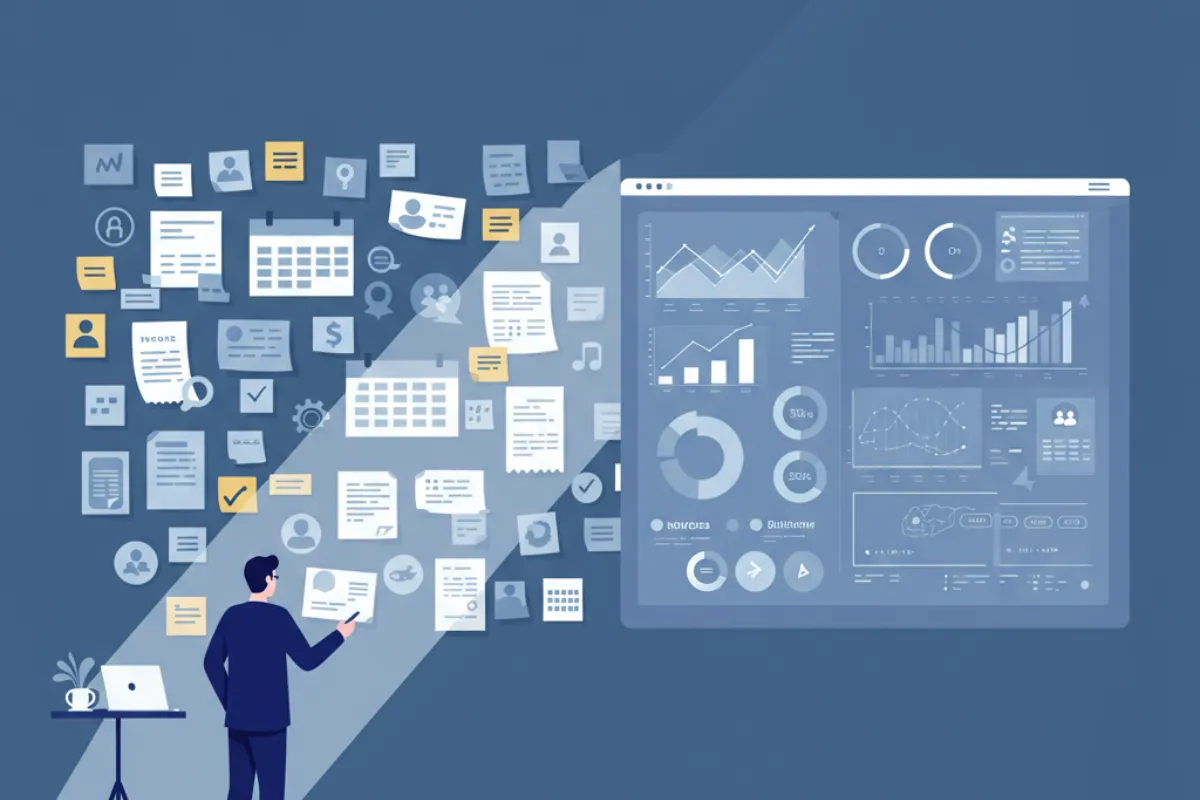
The information is usually already there. It's sitting in your accounting software, CRM, website, scheduling system, spreadsheets, or point-of-sale system. The challenge isn't collecting more data. It's knowing how to use the information you already have to make better decisions.
To me, that's what analytics is really about.
It's not about creating dozens of dashboards or learning complicated software. It's about getting a clearer picture of what's happening in your business so you can spend less time guessing and more time making confident decisions.
When "Busy" Doesn't Tell the Whole Story
One of the biggest misconceptions in business is that being busy means you're making progress.
Sometimes it does. Sometimes it jut means everyone is working hard without being able to see what's actually driving the workload.
I've seen businesses that looked successful on the surface because the phones were ringing and everyone was busy. But when they took a closer look, they realized their most profitable customers weren't the ones demanding the most attention. Or they discovered that a process everyone accepted as "normal" was quietly costing them hours every week.
That's the value of visibility.
When you can clearly answer questions like:
Which services are the most profitable?
Where are customers dropping off?
Which clients come back again and again?
What processes create the most delays?
...decision-making becomes much simpler.
You're no longer reacting to what feels true. You're making decisions based on what you can actually see.
Curious what your data could tell you?
Let's talk it through on a short discovery call.
Book a discovery call